

Consuelo De Haviland, Juliette Binoche, Lena Olin, Pascale Kalensky - The Unbearable Lightness of Being (1988)
14:20
57K
12 months ago
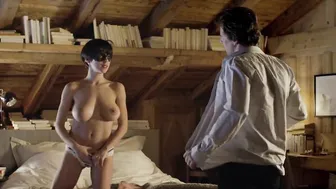
Consuelo De Haviland, Juliette Binoche, Lena Olin, Pascale Kalensky nude.
The Unbearable Lightness of Being (1988), directed by Philip Kaufman, is a cinematic adaptation of Milan Kundera’s philosophical novel, weaving love, politics, and existential musings against the backdrop of the 1968 Prague Spring. The performances of Consuelo De Haviland, Juliette Binoche, Lena Olin, and Pascale Kalensky (though I should note there seems to be some confusion in your query—Consuelo De Haviland and Pascale Kalensky do not appear in the film; the main female roles are played by Binoche and Olin, with supporting actresses like Stellan Skarsgård’s wife, My Skarsgård, in minor roles) are pivotal to its emotional and intellectual resonance.
Juliette Binoche, as Tereza, delivers a heartbreakingly vulnerable performance. Her portrayal of a young photographer torn between love and personal freedom is delicate yet intense, grounding the film’s loftier themes in raw human emotion. Binoche’s wide-eyed innocence and quiet strength make Tereza’s internal struggles palpable, especially in her relationship with Tomas, played with roguish charm by Daniel Day-Lewis. Lena Olin, as Sabina, Tomas’s artist-mistress, is magnetic—her carefree sensuality and fierce independence embody the “lightness” of the title. Olin’s chemistry with both Day-Lewis and Binoche crackles, particularly in the charged, erotic scenes that explore the boundaries of desire and fidelity. Their performances elevate the film’s exploration of love’s complexities, though the novel’s philosophical depth is somewhat diluted in translation to the screen.
The film’s strengths lie in its lush cinematography by Sven Nykvist and Kaufman’s ability to capture the sensual and political without losing narrative momentum. Prague’s fleeting beauty, juxtaposed with Soviet oppression, mirrors the characters’ personal dilemmas. However, the 171-minute runtime can feel indulgent, and some critics argue it sacrifices Kundera’s meditative nuance for melodrama. The supporting cast, including Skarsgård as the Engineer, adds texture, but the focus remains on the central trio.
The Unbearable Lightness of Being (1988), directed by Philip Kaufman, is a cinematic adaptation of Milan Kundera’s philosophical novel, weaving love, politics, and existential musings against the backdrop of the 1968 Prague Spring. The performances of Consuelo De Haviland, Juliette Binoche, Lena Olin, and Pascale Kalensky (though I should note there seems to be some confusion in your query—Consuelo De Haviland and Pascale Kalensky do not appear in the film; the main female roles are played by Binoche and Olin, with supporting actresses like Stellan Skarsgård’s wife, My Skarsgård, in minor roles) are pivotal to its emotional and intellectual resonance.
Juliette Binoche, as Tereza, delivers a heartbreakingly vulnerable performance. Her portrayal of a young photographer torn between love and personal freedom is delicate yet intense, grounding the film’s loftier themes in raw human emotion. Binoche’s wide-eyed innocence and quiet strength make Tereza’s internal struggles palpable, especially in her relationship with Tomas, played with roguish charm by Daniel Day-Lewis. Lena Olin, as Sabina, Tomas’s artist-mistress, is magnetic—her carefree sensuality and fierce independence embody the “lightness” of the title. Olin’s chemistry with both Day-Lewis and Binoche crackles, particularly in the charged, erotic scenes that explore the boundaries of desire and fidelity. Their performances elevate the film’s exploration of love’s complexities, though the novel’s philosophical depth is somewhat diluted in translation to the screen.
The film’s strengths lie in its lush cinematography by Sven Nykvist and Kaufman’s ability to capture the sensual and political without losing narrative momentum. Prague’s fleeting beauty, juxtaposed with Soviet oppression, mirrors the characters’ personal dilemmas. However, the 171-minute runtime can feel indulgent, and some critics argue it sacrifices Kundera’s meditative nuance for melodrama. The supporting cast, including Skarsgård as the Engineer, adds texture, but the focus remains on the central trio.
























Recommended Videos